Alberto Contador cleared of doping, but where’s the beef?

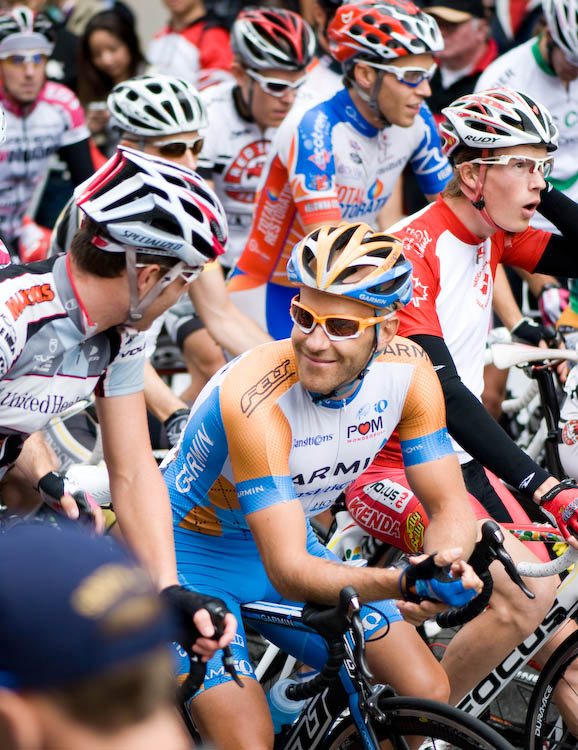
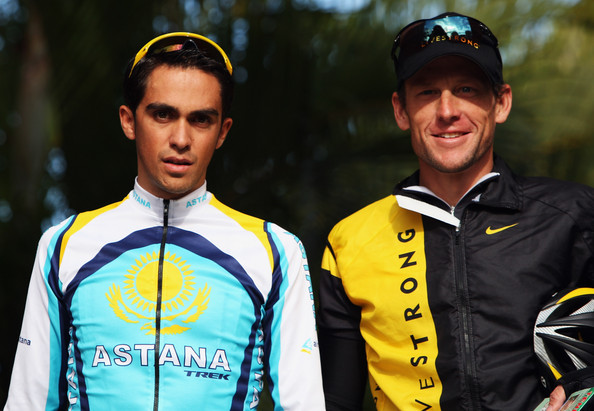
Alberto Contador and Lance Armstrong in happier times at the Team Astana training camp prior to the 2009 season. Twin sons of different mothers? Only history will tell, or will it? Photo © Bryn Lennon/Getty Images Europe

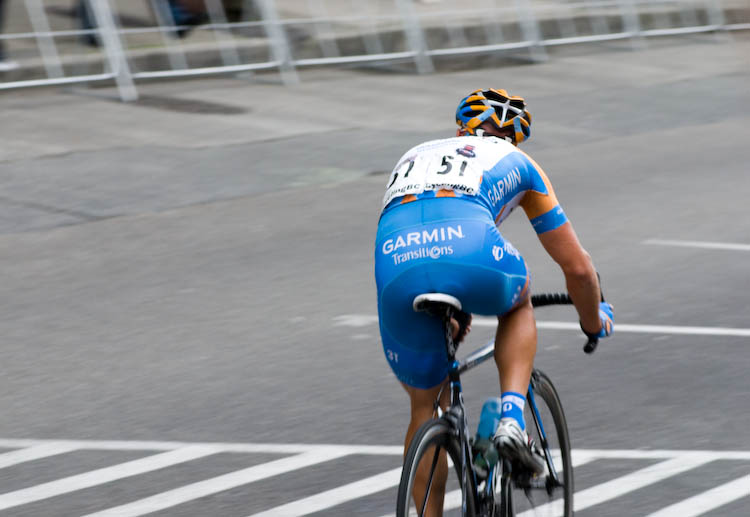
Professional cycling seems to have shot itself in the foot yet again. Three time Tour de France champion Alberto Contador has been cleared by the Royal Spanish Cycling Federation of doping. Contador had tested positive for clenbuterol with arguably small, but still detectable amounts on the second rest day of the 2010 Tour, claiming it was the result of tainted meat.

Now, the World Anti Doping Association’s rules clearly state that the athlete is liable for any positive test, and it is up to that athlete to prove without a doubt that they inadvertently ingested, or otherwise came into contact with the substance. So, where’s the beef?

To my knowledge, there has been no substantive proof given to the tainted meat assertion, and it appears that the Spanish association have chosen to let their countryman off on a technicality: the UCI’s rule #296 states that they have to prove that the rider knowingly doped.

What a mess. This appears, to me anyway, to make zero sense. Here you have the world’s anti-doping governing body’s (WADA) absolute liability clause being rebuked by a national federation (Royal Spanish Cycling Federation – RSCF), based on a sport’s governing body’s (UCI) own poorly worded, and sometimes contradictory regulations.

WADA appears toothless, the RSCF appear biased in favour of their star rider, and the UCI appear complicit, and utterly unqualified, or worse yet, unwilling to manage their sport.

Crazy? Yes, and is there a better reason than this absurdity to perhaps blow the whole thing up and start from scratch? What is the point of zero tolerance rules if they can be overturned by federations that show a distinct conflict of interest in refuting them? Ultimately, most of these decisions end up making their way to the Court for Arbitration on Sport (CAS) for a final ruling. What a colossal waste of time, and money.

Let’s not even talk about things like: the time delay between the actual test to the announcement, the suspicion that due process was not being followed by the UCI as they attempted to find an explanation, the length of time it took the Spanish federation to initially sanction Contador, and the fact that the initial 1 year ban should have been 2 years, based on the UCI’s own rules.

In my humble opinion, it’s time to purge the UCI of its old boys network, and take away the responsibility of national governing bodies to rule on positive drug tests. Give the rules, and WADA, some teeth.

It is ironic that the big cycling news today is that Lance Armstrong announced his retirement, barely a day after Contador’s absolution. Could we have two more poignant examples of allegations of the UCI’s double standards in dealing with its star athletes? Twin sons of different mothers? Only history will tell, or will it? The “cleansing” and “rebirth”of professional cycling will not occur until things change in the sport’s own governing body.


Posted in Sport | Tagged , , , , , , , , | Leave a comment

The Politics of Convenience.

Egyptian protesters face anti-riot policemen in Cairo on Friday, Jan. 28, 2011. Photo © Victoria Hazou / AP

I would hazard to guess that most people who pay attention to what is going on in the world, even their own little part of the wider global spectrum, are aware of it. But, it doesn’t make it any easier for someone like myself to stomach, when the politics of convenience is so unabashedly displayed as it has been in Iran’s response to the current social unrest in Egypt.

Today, Associated Press reported that:

Iran’s state prosecutor on Wednesday said the opposition should not stage its own rally in support of Egyptian protesters, warning of repercussions if it does so.

Say that again. It wasn’t that long ago that Iran’s Supreme Leader, Ayatollah Ali Khamenei, said :

“Today’s events in North of Africa, Egypt, Tunisia and certain other countries have another sense for the Iranian nation. They have special meaning. This is the same as ‘Islamic awakening,’ which is the result of the victory of the big revolution of the Iranian nation.”

Iran’s official IRNA news agency also quoted an Iranian Foreign Ministry statement:

“Iran supports the rightful demands of the Egyptian people and emphasizes they should be met.”

That was barely four days ago. What the Iranian government, and Supreme Leader both conveniently omitted, or chose to ignore, were the similarities to their own political crisis a mere 18 months previous. Iran was rocked by tens of thousands of protesters disputing the legitimacy of the country’s latest presidential election, which was dismissed by many as a fraud. It’s as if the worst crisis of legitimacy since the founding of the Islamic Republic of Iran never happened.

Do governments, wherever they may be, and of whatever shade of democracy or authoritarianism they wear, really think the public will continue to put up with such blatant, self-serving bs? The Iranian protesters of a year and a half ago were also vocalizing their “rightful demands”, only to be crushed brutally. And now, the Iranian leadership go ahead and outlaw public demonstrations of support for the Egyptian cause, probably to ensure that their own people stay on message – the government’s message, and not the one the protesters in Egypt eschew, and the Iranian people, likewise chanted in the streets of Tehran.

In my view, many governments should be mindful of being called out for their politics of convenience, and by extension, their tacit, and expressed support for regimes, or even issues that negatively impact the people they claim to represent, claim to safeguard the best interests of, and claim to serve.

In the guise of the former South Vietnam, and Iran’s own peacock throne of  Shah Mohammad Reza Pahlavi, history is rife with examples of wrongful support of regimes that didn’t deserve it. We have seen what happens to the governments of these regimes when they lose touch with their populace, if they ever were in the first place. But history has also shown how those who were complicit in supporting these governments, whether openly or covertly, are sometimes adversely affected. It can come back to bite them in the ass, and good. Of course these two examples position the United States as the whipping boy of hindsight. But the U.S. is not alone in this.

Canada’s role, and voice in large global events is often a sidebar. But, as a citizen of the world, do I not have a responsibility to call my government to task on its choices, outside of merely casting a ballot on election day? Could I not question our government’s support for a regime like Hamid Karzai’s in Afghanistan based on known corruption and nepotism alone? What about the actions of Canada’s friend, the government of Israel, in dealing with the Palestinian issue?

I believe Canadians can learn a thing or two from our American neighbour’s past experiences when it comes to insisting our own levels of government take responsibility for their decisions, and are held accountable for them. It could be on a federal level. But, the elimination of the politics of convenience could start even closer to home. Here in British Columbia,  a public asset known as BC Rail, and worth $1 billion dollars, was sold under questionable circumstances. The resultant criminal investigation was suddenly stopped by a plea, just before high-profile members of the government were due to testify. Convenient, or not? My hope is that the public demands we find out.

Posted in News | Tagged , , , , , | Leave a comment

Memory Music – NOLA Style.

Tribe Nunzio Reunion, January 2, 2010 at Chickie Wah Wah, New Orleans, Louisiana. Photo © Jerry Moran – Native Orleanian Fine Photography.

The ability of music to take you back to a specific place and time, complete with main, and supporting cast assembled, is a remarkable, and comforting thing. So, it is with equal parts amazement and thankfulness that I reconnected with Tribe Nunzio, and by extension, the city of New Orleans earlier this year.

Known by numerous monikers like NOLA (New Orleans, Louisiana), “Nawlins” (with the requisite drawl), and the Big Easy, life has been anything but for the below sea level, self-confessed home of jazz, Cajun-Zydeco fusion, and Mississippi Delta blues, post Hurricane Katrina.

Then, perhaps I shouldn’t find it surprising that a city, which lost 50% of its half-million population from a cataclysmic natural disaster, resulting in the worst civil engineering failure in U.S history, and an equally cataclysmic example of human ineptitude in the form of the Federal Emergency Management Agency (FEMA), shows its rebirth through the seeds it has sown for decades – its music.

Tribe Nunzio, or “the Tribe” as they were known locally, were a masterful blend of jazz, blues and world rhythms back in the day. They were part of the funk wave that breached the city’s levees as the era of punk receded. Fronted by a wonderfully wacky, vivacious, and oh so colourful female lead named Holden Miller, a.k.a. Peaches Edelstein, they included local musical cornerstones like Jeff Treffinger on guitar, and Vernon Rome and Damon Shea on bass.

But, part of their overall attraction for me was the somewhat un-scheduled inclusion of other amazing musicians –  on sax, on percussion, on whatever. You never knew exactly what form the Tribe would take on a given night. It almost seemed as if their performance was a virtual jam session, which came together based on who happened to be in the house.

I’m not a music expert by any stretch of the imagination. But, I count myself lucky to have been leading bicycle tours in the Felicianas, and based out of New Orleans in the early ‘90s. It was incredibly beautiful, lush countryside, which seemed at odds with the social and political history that played out in the area a little over a century ago, and was still lurking just under the surface in certain otherwise casual conversations.

I was doubly lucky to have been dragged out for late nights of dancing and music with bands such as the Tribe. It also helped to have a good friend who was a local. Otherwise, I don’t know if I would have found my way to musical outposts like Tipitina’s, or Cafe Brasil, a place that came to represent the Frenchmen Street music scene on the periphery of the French Quarter to this out of place Vancouverite.

Long after I left New Orleans I continued to listen to Tribe Nunzio, courtesy of a well-worn cassette tape. I searched for the one CD I knew they had recorded, but to no avail. By 1994, the Tribe was apparently history, and the CD was out of print. So, perhaps you can imagine my surprise, and excitement when a random Googling of their name turned up news of their 2010 reunion at Chickie Wah Wah. Good on ya New Orleans. Good on ya Tribe, and thank you! Given enough notice, I’ll be there again someday – maybe at the Brasil, late into the night prior to Mardi Gras, or Jazz Fest.

Thank you to Jerry Moran of Native Orleanian Fine Photography for the brilliant images at: http://nativeorleanian.com Click below to hear the vibe. Enjoy.

Shiver from Tribe Nunzio’s Lives on Fire.
Posted in Lifestyle, Travel | Tagged , , , , , , , , | 1 Comment

Fate and an old Miele, and I’m not talking about a vacuum.

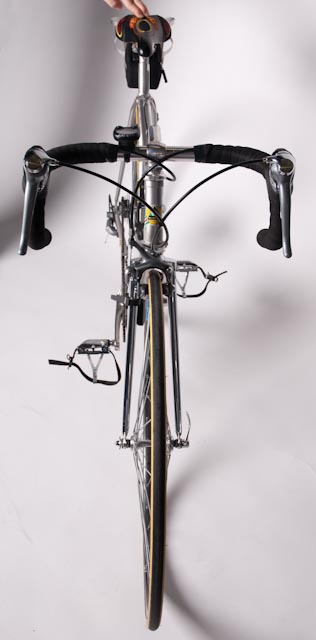
My 1987 Miele Delta, after its makeover in the summer of 2010. Photo © Andrea Sirois Photography.

I like to believe it was fate that returned my first real road bike to me two summers ago. I’m talking about a 1987 Miele Delta, beautiful and unassuming with its Ishiwata 022 tubing, clean lugged joints, utilitarian but bomb-proof Suntour componentry, and not to mention, Campy compatible back in the day.

The Miele was bought from Cicli Forza on Denman and Davie, before the planting of northwest rainforest adaptable palm trees, at a time when I had tired of my current touring steed and wanted a fast bike for real workouts. She was my companion on burns out and around UBC as I tried to hop on the wheels of local cycling gods like Alex Stieda and Steve McMurdo. She was also the bike I chose for runs up to Whistler with friends looking for a challenge before an all-night party at someone’s club cabin. Those were the days of poor road conditions, virtually no shoulder, narrow lanes with sometimes heavy traffic, and road washouts like M Creek on a regular basis. Needless to say, GranFondo mass rides weren’t even a figment of anyone’s imagination at the time.

Photo © Andrea Sirois Photography.

The Miele followed me, racked to the roof of my old BMW 2002 with its touring stable mate and a sorely under-used windsurf board, on three round trips to Ryerson Polytechnic Institute in Toronto during the late ’80s and early ’90s. She fell into a sort of coma after I graduated in ’92, and collected dust in storage for the next six years as I roamed the globe for work, usually accompanied by my touring bike.

I finally succumbed to the pressure of space, or more specifically, lack of it, in 1999. The Miele was sold to a work colleague for a song, and for the next eleven years I regretted the decision and lamented it, as my partner Andrea and some very patient friends can surely attest. It’s not that the Miele was that great a bike really. It was middle-high end at the time – nothing really flash. But, she was beautiful to ride, quick in the corners, a decent climber, and she was the first.

So, it was fate when I ran into Ted not once, but twice two summers ago. He volunteered that he still had my old road bike, almost as if he saw the question in a thought balloon rising from my caricature-like face. His bad back now prevented him from riding it. So, would he sell it back to me? Absolutely, and at the price he paid for it. Sold!

Photo © Andrea Sirois Photography.

Well, two years later and after a sanding, painting, new original decals, an upgrade to some newer, but for the most part period accurate components, here she is – complete and ready for the next stage in our continuing relationship around town, up Cypress, up Seymour, and hopefully, up to Whistler.

Finally, to all you aficionados of vintage steel bikes, who painstakingly and lovingly keep these beautiful machines on the road and ridden regularly, chapeau!

Photo © Andrea Sirois Photography.

Posted in Lifestyle, Sport | Tagged , , , , , , , , , , , , , | 5 Comments

“Always a Patricia”: The motto adopted by the Princess Patricia’s Canadian Light Infantry Association on May 14, 2010.


They always have each other's back. The Canadian Forces on patrol in Kandahar Province, Afghanistan, October 2008. Photo © Frank Vilaca.

It’s rare to get clear sunny weather in Vancouver in the winter. But, when it does appear, it’s usually accompanied by freezing temperatures, and in certain circumstances, is carried south on the train of a stiff, gale-force nor’wester.

Andrea and I had gotten into the habit of “doing” the sea wall around Vancouver’s Stanley Park on a regular basis, about twice per week. This day, January 7, 2010 began in spectacular fashion; clear, open-ocean windy, and -8ºC cold. She would do a walk/run in a clockwise direction, while I would run counter-clockwise, trying to turn back time on my 10km times, chasing the low to sub 40 minute milestones of decades past. Our paths would meet up somewhere around the last ½ km of both our routes, and we would finish up together.

We finished as we always do at Second Beach, and it was here that I ran into Dennis. I spotted him huddled over a cup of instant noodles at a concrete concession stand table. I walked over to talk to him, noticing that his possessions were organized in a cart, with what looked like a tarp hung loosely to dry, the condensed moisture frozen and waiting for a good hard shake.

I asked him how his night had been, seeing as there had been near record low temperatures, and it looked as if he had spent the night outside. He very quickly confirmed that he had in fact camped out, but that he preferred this to the shelter options that were available to him; shelter options that would not guarantee the security of his few cart-borne items of personal importance.

He was better prepared than most he said, thanks to time spent in the military. I was given a quick lesson in the realities of someone in his situation. He was homeless and depending on when whatever money he was entitled to through a pension, or some other means, was given to him in the fall, he might, or might not be able to pay for a room in a cheap hotel or hostel for the winter months. If he was really lucky, the dilapidated room might have cooking facilities that amounted to a hot plate, allowing him to boil water and cook simple fare like the noodles he was now slurping back in a cloud of rising steam.

He talked about how much better his situation was when he was able to cook something, anything. It was healthier, and much less expensive. Maybe it was the questions I asked, or the fact I knew a little about some of the pillars of his downtown east-side world like the Union Gospel Mission, and Reverend Rick Matthews’ First United Church, that prompted Dennis to ask me if I’d been on the “outside”, as he called it.

The outside? No, I hadn’t been, or come from there. But, I was taken aback by his choice of words; his perception of his situation as being seemingly “outside” that of the society that kept moving at breakneck speed all around him, often oblivious to the plight of people like him who roamed many parts of Vancouver. Had we relegated the homeless to the roles of “extras” in this film set that was our Vancouver?

We chatted for a while longer. I told him that I had not experienced living on the outside, although I felt that more people than our society would like to believe were closer to that reality than anyone would expect. Perhaps the only difference was in the individual’s support network, however someone wanted to define it.

I asked Dennis about the military. My experience in the production of the Combat School documentary series showed me the incredible camaraderie and support within the ranks of the army. Everything I had seen and heard while covering Canadian men and women preparing for deployment to the war zone of Afghanistan told me that the foundation for their dedication was the group of people immediately around them: the people they had trained with, the people they had sweated with, the people they had hurt with. There was a sense of responsibility to the person on their right, and on their left that is incomprehensible to anyone unless they have been the target of someone, Taliban or otherwise, whose sole aim is to kill them.

Dennis was a former member of the Princess Patricia’s Canadian Light Infantry out of Edmonton, Alberta. The PPCLI are one of Canada’s most storied, and decorated regiments – think Ypres, think the Somme, think Passchendaele, think Ortona. He had served his country as a peacekeeper in Cyprus, the Middle East, and the former Yugoslavia. He had been a blue beret, serving his nation, and the world in numerous thankless and dangerous situations around the globe. Now, he was eating cheap dollar-a-pack noodles in the chill morning air, with little more than the clothes on his back and a sleeping bag for comfort.

Where was his support network? Where were the fellow soldiers who covered his flank, who had his back? Dennis said he received a pension from the military. But, did the military know where he was? Did his regiment know his situation? Did they know he was homeless? The regiment’s old unofficial motto was “one, two, can do!” Dennis was a perfect example of this resourcefulness, and it was obvious that he was, as he said, better prepared than most. But, if he was, as the regiment’s new adopted motto states, “always a Patricia”, where were they now? Where were all of us fellow citizens now?

Posted in News | Tagged , , , , , , | Leave a comment

Serendipity and a Cuppa Joe.

Today’s coffee was of a serendipitous nature, leaving me feeling warmer than my normal “I don’t really drink coffee” mocha usually does.

His name was Jamie. But, people who knew him usually called him Jim. He used to ride a bicycle, but his diabetes now made that impossible. Jim had a tough time walking even a few blocks these days.

A couple of years ago he found the solution to his mobility needs; he bought an electric bike and fabricated a makeshift trailer to tow behind it, allowing him to do odd jobs. Funny, like many who frequent Vancouver’s Kitsilano neighbourhood, I’d seen him around for months, maybe even years, all the time knowing little about the man.

It was a frigid day by Vancouver standards, -3° C, and today was the day Jim’s bike gave up the ghost. He pushed it three blocks to one of his frequented local coffee shops and sat outside with a hot cuppa joe. I arrived just in time to see him looking down at his not-quite-right rig.

I’m a pretty good bicycle mechanic, but electric motors are a whole different animal. He showed me that his battery was fully charged, and described the banging/popping noise he heard coming from the direction of his hub-enclosed electric motor. I felt pretty useless. He was stuck; the bike wasn’t going anywhere, and he could barely walk. To make matters worse, the helpful e-bike shop where he bought his trusty steed was closed on Mondays.

Fate, karma, or perhaps a bit of both then took over. Jim volunteered that Ed, his apartment manager, had a van, and could probably help out. But, he didn’t know his phone number, and although the apartment where they lived was only three or four blocks away, it was too far for him to walk. Jim didn’t own a cell phone. No big deal. I had a one, and a computer. Unfortunately, a search through the 411 listings on my laptop, and even a quick check of Craigslist apartment rental listings for the area, something Ed used regularly to post vacancies, proved fruitless.

Luckily, Jim remembered that Jackie, a friend who worked at UBC, would have Ed’s number. More importantly, Jim had Jackie’s number memorized. A quick couple of phone calls later and Ed was on his way. It took two trips, but we hoisted Jim’s electric bike and trailer into the back of the mini van, and Jim and Ed were on their way home to look after the repairs.

In the aftermath, I learned from the coffee shop baristas that they considered Jim a regular, and had heard past stories of him being involved with ships, and the sea – even stories of him being lost in the roiling tempest of the open ocean. I thought back to the man’s hands: the leathered paws of a seaman if ever there were, belonging to someone who had perhaps survived the perfect storm. I had barely scratched the surface of learning a little bit about Jim, but it was obvious that he had a support network of sorts: his apartment manager Ed, Jackie at UBC, and the baristas he saw daily. I was glad to have been a very small part of that network on this day. Even more, I was looking forward to running into him again, recognizing the man I knew a little bit more about, saying hello, and now addressing him as Jim.


Update: January 17, 2011 – Ran across Jim today. He was savoring his cuppa joe, and had been recovering from an operation to deal with a long-lingering hernia. He said he felt good, and his electric scooter was performing just fine, thank you very much.

Posted in Lifestyle | Tagged , , | 1 Comment

Vancouver’s Dedicated Bicycle Lane Debate

Photograph © Dan Toulgoet, Vancouver Courier.

My name is Mark, and I’m a cyclist. I can almost hear the requisite AA meeting greeting in response, from like-minded bicycling types: “Hello Mark. Welcome.” But, let me point out that I am also a motorist, and holder of a professional driver’s licence.

As I listen to the debate on separated bicycle lanes here in Vancouver I come away with the feeling that the arguments presented often seem to represent the findings, or perhaps more accurately, the interpretation of the findings from two often divergent groups – those who want more cycling infrastructure, and those that, for whatever reason, want to delay it, if not prevent it outright.

Sure, the issue often brought forward is a lack of transparency and consultation, and, or money. A case can be made that for some people there hasn’t been enough consultation, and time spent exploring alternatives. As far as money goes, there is always an issue to be raised when the question involves where to spend taxpayer dollars, and so it should be.

The City of Vancouver maintains that they have gone through an exhaustive process, and they are ready to move forward. Business associations are quick to provide stats showing a predicted loss of income, and cycling advocates are always more than willing to support the “essence” of initiatives that make cycling more viable, and bring out a list retailers who support bicycling infrastructure in order to refute assertions to the contrary. In my humble opinion, the truth is always somewhere in the middle.

This is a great opportunity for proponents of healthier lifestyles – however you define the term “healthier.” I don’t want to be dragged into the debate on whether Mayor Gregor Robertson’s City Hall rules too autocratically, or if dedicated bike lanes automatically mean lost business to the local retailers. I want to promote compromise by suggesting something cyclists, myself included, can do to prove we are responsible, and deserve the new initiatives that will benefit us, and hopefully convince those who recognize the environmental, time, and health benefits of cycling, but have reservations.

The cycling community needs to take away the major complaint that many seemingly productive discussions often devolve into within the public forum. Simply stated, cyclists need to police themselves. They need to obey the rules of the road. They need to be more aware, more visible, more predictable, and yes, even willing to call each other out on bone-head moves that cause motorists no end of grief, and can cause pedestrians a whole lot more. They don’t need to be as good as motorists when it comes to traffic laws and pedestrian interaction. They need to be better. The patience and courtesy they want when seeking recognition as a legitimate form of transportation, as well as their own personal safety, depends on it.

A friend of mine suggested that we humans often need to be forced to change our adverse behavior; we have to be shamed into it like the kid with the coloured ring around them in the swimming pool. That may be the statistical truth. But short of spraying offending, law breaking, discourteous cyclists with a semi-permanent paint that washes off after a few days, or posting photos of the offending minority on the Internet, an idea that has some merit in my mind, there are a few things that I suggest be done initially. By the way, to my knowledge, there is at least one local resident already posting video on YouTube of Vancouver cyclists skirting the law.

First, the City needs to take away all the subjectivity at intersections – the source of many interpretations of the law by well-meaning, but often ill-informed cyclists and motorists. For instance, at intersections that have a pedestrian signal and a stop sign, a traffic light should replace the stop sign. How many times have motorists and cyclists blown through these stop signs when they see that cross traffic has stopped for the pedestrian signal? My experience says the majority of the time. Go sit in a coffee shop at either 10th , or 14th Avenue and Main Street, and you’ll see what I mean. At the very least, this should be done along all the existing, and future bikeways. If this is too costly, then maybe the actual rules of the road need to be somewhat amended for cyclists at these intersections, like they already are in certain countries. This would mean changing a required full stop to slowing down, and proceeding with caution.

Then, there needs to be more effort given to promoting the shared use of our roadways. Everyone is seemingly in a hurry these days. But that shouldn’t be at the expense of the rules of the road, and common courtesy. The use of public roadways is a privilege, and a benefit, not a right. Billboard campaigns, public service announcements courtesy of ICBC, and regular reminders on local media may ultimately land on many deaf ears. But, isn’t it worth pursuing if the end result can be equated to the way drinking and driving campaigns have wound themselves into our collective social conscience?

Just as importantly, and in my view even more so, the cycling community, led by advocacy groups and with the support of local government, needs to prove that they can responsibly manage themselves. As a group, we need to recognize and call out the actions of the few that do us all a disservice, and serve to undo all the great work that is being done on our behalf. This is an absolute necessity if we want to be taken seriously. There is a great opportunity here in Vancouver. Some equate it to a watershed moment, a chance to enact a paradigm shift in our thinking about viable transportation options.

So, to all cyclists, make the commitment to take an active role in maintaining cycling’s position as a responsible lifestyle choice, included in the same list as walking, public transportation, and yes, even driving a car. Do it politely. Do it from a position of respect. But do it. Ride responsibly and be prepared to call out your fellow cyclists.

To read this piece, as published in the Vancouver Courier, please click on the following link: http://www.vancourier.com/Cyclists+must+prove+themselves+worthy+bike+lanes+more/4004458/story.html

Posted in News | Tagged , , | Leave a comment

Nauru?

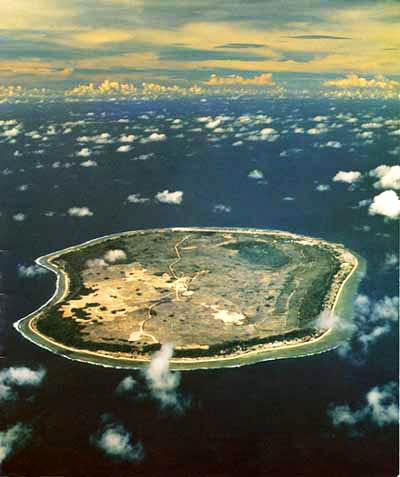
The Republic of Nauru: 0°31′38″South, 166°56′12″East.

So the question of the day is: have you ever heard of Nauru, and where in the world is it? Okay, so that is really two questions. The thought never entered my mind until this morning, when I was checking out the medal standings at the 2010 Commonwealth Games in Delhi, India.

It turns out that Nauru, on top of winning the gold medal in weightlifting in the men’s 77kg weight class, is also the holder of a number of other firsts. The smallest island nation in the world, this republic, which is almost exactly the same size as British Columbia’s Mayne Island, once enjoyed the globe’s highest per capita income shortly after independence in the late 1960’s and early 1970’s.

It is also probably one of the few sovereign nations to be virtually cut off from the rest of the world when Air Nauru’s fleet of one aircraft, a Boeing 737, was impounded in Melbourne’s Tullamarine International Airport. For a period of a few months, access to Nauru was limited to ocean-going ships only. And that wasn’t even as easy as it sounds. It turns out that Nauru, in almost medieval fashion, was surrounded by a coral reef, with only a few breaks that limited passage to small boats only. Yes, this island nation didn’t, and still doesn’t possess a deepwater port. Ouch.

But, the real story of Nauru is one of human mismanagement of resources and the environment on a catastrophic level. True, centuries of bird shit had mixed with indigenous corral outcroppings, resulting in huge phosphate deposits that were systematically raped, scraped and gouged from the inland area of the island. Huge royalty payments coerced residents into purchasing Lamborghinis, despite the cruel irony of limiting the Italian super cars track to a narrow, partially paved 25 kph ring road. In the spirit of gulf oil sheikhdoms, charter jets flew to Singapore and Hawaii for lavish shopping trips. But, by the 1990’s the resource coffers were pretty much depleted, leaving a legacy of bad investment decisions that included the funding of an ill-fated London theatre musical, and a perfect case study for the systematic and utter desertification of an environment.

So, the answer to the question I asked at the beginning of this post is that Nauru lies within Micronesia in the South Pacific Ocean, east of Papua New Guinea. The question that remains is how does this nation continue to exist?

Currently, it has 90% unemployment, with roughly 95% of the employed working for a government that has been suspended since June 2010 due to “constitutional issues.” Add to this political quandary a population that is aiming for the medal podium in obesity statistics, and takes the gold medal for having the highest level of type 2 diabetes amongst its inhabitants, and you have a nation that begs the question: How does this place even survive in its current state?

Well, some unusual make work projects courtesy of the Australian Immigration people, and some well-timed votes in the UN have brought in much needed foreign aid to replace past efforts at providing tax havens, as well as the provision of washing and drying facilities for certain questionable types of foreign cash. But, surely there must be more that a tropical island just off the Equator can bring to the table? Do you find this interesting? So do I, to the point where I would love to see this place, and stay in its one dated 1960’s era hotel. The last question is, now that I know where and what it is, how do I get there?

By the way, Nauru’s medal count at the 2010 Commonwealth Games now stands at 2: 1 gold, and 1 silver.

Posted in News | Tagged , , , | Leave a comment

Tuft in a league of his own at 2010 Yaletown Grand Prix

Art in motion: Svein Tuft, home for a workman's holiday, B.C. Superweek, July 2010. Photo © Andrea Sirois Photography.

To say that Svein Tuft won the men’s elite race at the 2010 Yaletown Grand Prix on Canada Day, July 1, 2010 would be…an understatement. Fresh from a third successive Canadian National Time Trial Championship, and sixth in the last seven years, Tuft would lead the criterium race for virtually all of its 65 minute length.

Tuft chats with former teammate Andrew Pinfold before the 2010 Yaletown Grand Prix. Photo © Andrea Sirois Photography.

Tuft has come off an impressive early season which saw him compete, and finish the Giro d’Italia with his Garmin-Transitions pro team. Even with such impressive showings, Tuft was not part of Garmin’s 2010 Tour de France roster, which included fellow Canadian Ryder Hesjedal.

So, instead of staying in Europe, Tuft decided to use the break to return home, competing in Nationals and Yaletown with friend and Garmin teammate Christian Meier. Meier, and the rest of the Yaletown elite competitors, found themselves looking at the same view for much of the race.

The view, as seen from the elite men’s chase group at the 2010 Yaletown Grand Prix. Photo © Andrea Sirois Photography.

That is, until Tuft would ride up on their wheel, lapping the field once – and almost twice! Tuft would win handily and share the podium with teammate Meier (3rd), and former teammate Andrew Pinfold (2nd). It was a reunion of sorts, with all being part of the hugely successful local Symmetrics team from 2008.

Svein Tuft, having lapped the field once, he is on his way toward a second. Photo © Andrea Sirois Photography.

After some well deserved rest, it will be back to Europe for the greatest Canadian cyclist few, relatively speaking of course, have ever heard of. Plans include a slate of races including the Vuelta a Espana in August, and then…who knows.

Former Symmetrics teammates share the podium at 2010 Yaletown Grand Prix. (L to R) Andrew Pinfold, Svein Tuft, Christian Meier. Photo © Andrea Sirois Photography

Stay tuned. Perhaps Steve Bauer’s dream of an all-Canadian entry in a future Tour de France is not so far-fetched after all. Team Spydertech powered by Planet Energy with Svein Tuft, Christian Meier, Andrew Pinfold, Ryan Roth, Francois Parisien….Hmmm…

Remember, you heard it here first.

Tuft and yours truly. Photo © Andrea Sirois Photography

Posted in Sport | Tagged , , , , , , | Leave a comment

A U.S. Soldier Dies…in Canada.

Band of Brothers. Members of 1 Platoon, Mike Company, 3 RCR: Pte. Dave Aubin, Pte. Jeremy Hillson, Cpl. Sam Miranda, Pte. Jonathan Scott, and Sgt. Karam Byne rest outside their LAV, Kandahar, Afghanistan, October 2008. Photo © Frank Vilaca.

It was a clear, spring morning on Monday May 5, 2008. Field exercise Maple Guardian was well underway as the members of the 3rd Royal Canadian Regiment, based at CFB Petawawa in Ontario, continued the last major hurdle of their operational readiness training.

The men and women of 3 RCR were here at the Canadian Manoeuvre Training Centre in Wainwright, Alberta in preparation for their deployment to Kandahar, Afghanistan in October. The U.S. military was providing support in the form of elements like Chinook heavy lift helicopters from the 159th Aviation Regiment in Fort Lewis, Washington. The CMTC training was the most advanced military training in our nation’s history, and arguably, in the world.

U.S. Army Specialist Joseph Cerfus, 25, was part of the “Hookers”. Specifically, he was one of the unit’s four ground personnel who were tasked with attaching loads with steel cables and hooks to the underside of Chinook helicopters that were literally hovering just above their heads.

That day, our crew was filming at the lift zone as part of Discovery Channel’s Combat School series. The 159th were to haul the stripped-down fuselage of an old Sea King helicopter to a location where it would serve as part of that day’s exercise. I spoke briefly with Joseph Cerfus because I needed to get signed releases from him, and his three other colleagues.

He had the air of a leader, and provided me with a brief, compelling, and surgically precise description of his life in the two or three minutes we had before the arrival of his unit’s Chinook. Joseph became a member of the U.S. Navy at 17, served two tours of duty in Iraq, returning home to Marysville, Washington after the death of his brother. He told me that he joined the U.S. Army reserves because, ironically, it was a quicker way to get his wings as a pilot. He was engaged and due to be married later that summer.

In retrospect, the next few minutes seemed to take much longer to play out, at least in my mind. Our crew moved to get out of the wash of the incoming Chinook’s huge 60-foot rotor blades. We thought we were a safe distance away, but after a second or two of being smacked with the turbulence, we moved back even further, perhaps no more than 100 meters in all.

Joseph and his ground crew positioned themselves on, and around the fuselage – two of them on top of the Sea King, ready to attach the hooked cables to the Chinook’s underbelly, and two on the ground, ready to release the cables supporting the fuselage once it was securely hooked to the Chinook.

Joseph and a colleague were on top and hooked up the fuselage. The two specialists on the ground then released the supporting cables, and moved out of the way. At that moment, we expected Joseph and his mate to jump off the Sea King, clearing out so the Chinook could carry it away.

Instead, there was a moment of hesitation, the lift cables went slack, and then fell to the sides. The fuselage, with no supporting cables on the ground, and Joseph and his colleague still on top, began to rock violently from side to side due to the buffeting from the Chinook’s rotors. It must have been a split second decision on which way to jump, all the while trying to maintain their balance. Both men slid off the side as the Sea King fuselage began to roll in their direction.

Joseph’s partner managed to sprint to the side, avoiding the tumbling airframe. Joseph was not as lucky. He slipped upon hitting the ground, and was desperately trying to regain his feet when he disappeared underneath the Sea King.

In the moments that followed, the Chinook landed a short distance away. I could see the loadmaster throw off his helmet and sprint towards Joseph, who lay out of our sight, behind the now resting hulk of the fuselage. Joseph M. Cerfus was pronounced dead in hospital at 11:54am.

From all the accounts I read afterwards, Joseph was a wonderful person who lived life to the fullest in the true spirit of carpe diem. For some reason I kept his photographic release form until just recently, pulling it out and looking at it from time to time. I thought of the personable young soldier I spoke to in the final minutes of his life; the soldier who was about to be married; the soldier who had dodged the most dangerous of bullets in a decidedly non-figurative sense not once, but twice in Iraq; the soldier who had come home with a dream to fly. He never saw this coming. But who does when death comes unexpectedly? Carpe diem.

RIP Joseph Cerfus.

Photo courtesy of U.S. Army Reserve.

Posted in News | Leave a comment