

Integrated transport, Bombay-style, in the downtown business district.
Photo by Mark Mauchline.
The earth’s axis must have shifted back in June of this year. And in this case, that’s a good thing – a very good thing. A Mumbai-based architectural firm won the urban planning and design category of the Cycling Visionaries Award at the Velo-city 2013 conference in Vienna, Austria.
Velo-city is an annual cycling planning and infrastructure conference for the global stage. Its mandate encompasses the more far-reaching aspirations of better urban planning, and greater liveability for all, while coming from a distinctly pro-cycling perspective.
At first glance, the truly amazing part of the winning proposal from Abraham John Architects is that it is designed, and hopefully destined for the city of Mumbai, often still referred to by its old colonial nomenclature, Bombay. Anyone who lives in, or has visited Bombay, will recognize the plan’s enormity. Currently, the north-south axis of the Western Railway bisects the metropolis in two. It creates both a psychological, and physical barrier to those trying to move from east to west, or vise versa, across the city. According to Abraham John Architects, 4000 pedestrians are killed crossing the railway lines every year, and seven million people use the Western Railway commuter trains daily.
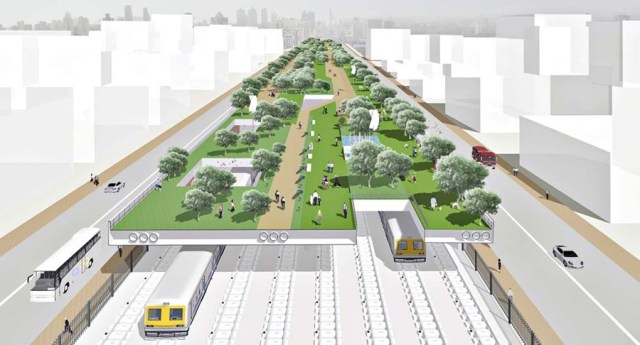
The Bombay Greenway Project by Abraham John Architects, 2013.
The plan is to cover the above ground railway lines with a continuous multi-use greenway. In effect, the railway would become a subway, with its top platform becoming a 114 kilometer-long park: an area for pedestrians and cyclists to engage in human-powered transportation options, recreation, and healthier city living. The proposal calls for the creation of an area for Mumbaikers to relax, read, picnic and enjoy nature courtesy of some much-needed green space, complete with re-introduced native tree species.
It has been almost two decades since I was last in Bombay, 1997 to be exact, a virtual lifetime ago in the ongoing evolution that is modern India. Things have changed. The trains are busier – jammed to the gunwales would be an understatement I am sure – and the population rises to what must surely be an inevitable breaking point. Even so, I imagine much of what I remember is still relevant.
The railway was originally built during the time of the British Raj, and although some new rolling stock has been added in the last decade, most of its carriages date from the 1950’s, and often look much older. Faded red and yellow paint peels, clinging futilely to the indifferent, aged exteriors of trains hurtling down the tracks toward their destinations. Windows are wedged permanently open to combat the oppressive heat and humidity, with only the odd overhead fan working, albeit at a speed that generates little or no relief.
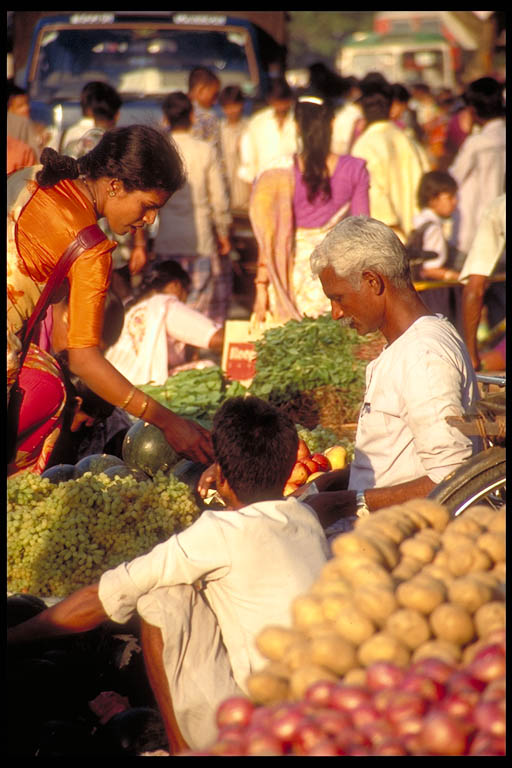
Vegetable vendors outside Borivili Station, Mumbai, India.
Photo by Mark Mauchline
My commute began in the northern suburb of Borivili, a sometimes terminus for certain lines. Waiting on the platform with my cousin as my guide, we watched as train after northbound train entered the station, stopping and exchanging passengers before trundling off towards the end of the line at Churchgate Station, the city center. Naively, I thought that boarding a Western Railways train at the northern terminus would be a relatively relaxed, if not easy affair at 7:00am. My poorly calculated assumption was based on the belief trains would start their southbound journey empty.
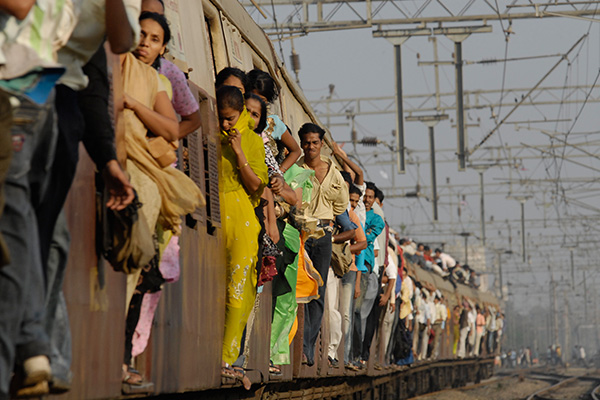
The daily commute for many residents of Mumbai, India.
Photo courtesy of Kavita Dadhe.
Herein lay the problem: the trains arrived virtually full. And, in an example of the quirkiness that can only be understood through experience, southbound commuters in Bombay often went kilometers out of their way, heading north in an attempt to get a seat, or even squeeze on board for the cattle-car equivalent of standing room. Ironically, the southbound commute into Bombay often started by heading north from stations as far away as Andheri and Santacruz, almost halfway down the line.
Being a woman, my cousin would board a segregated “women only” car, and I would be left to fend for myself. I would launch myself into the sea of primarily male bodies clogging up the permanently open entrance of another carriage. I termed the experience “the crush”.
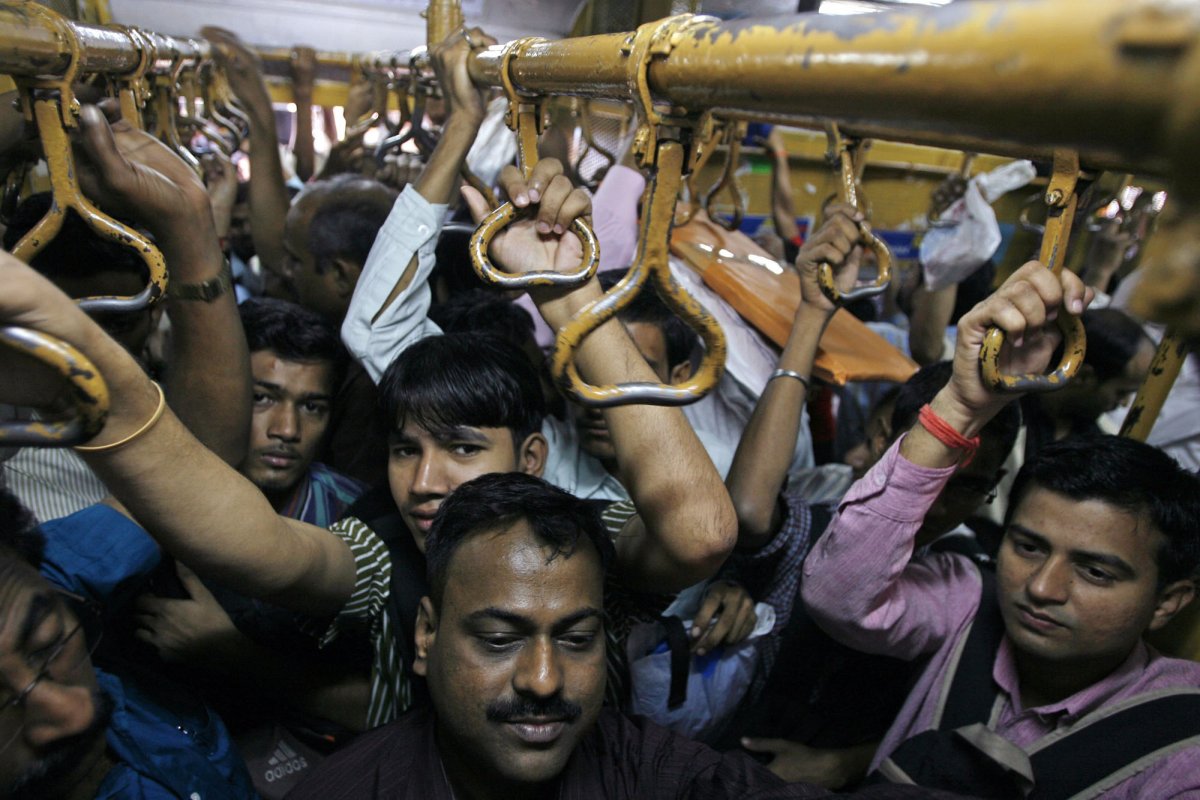
Even inside the Western Railways carriage, the “crush” continues.
Photo © Arko Datta / Reuters.
Myself, and many of my fellow commuters left Borivili platform invigorated by the relative coolness of the morning, dressed in crisp, freshly pressed clothes. But, once inside the trains, the quest for a space to call your own became a struggle of epic proportions. Forcing yourself aggressively through the sea of jam-packed bodies was nothing personal, it became a matter of survival. Eventually, you became part of an almost gelatinous mass of people, sandwiched in on all sides, multiple bodies pressed up against one another, sharing a common exchange of heat, sweat, and periodically, the aroma of the previous night’s spice-infused dinner.
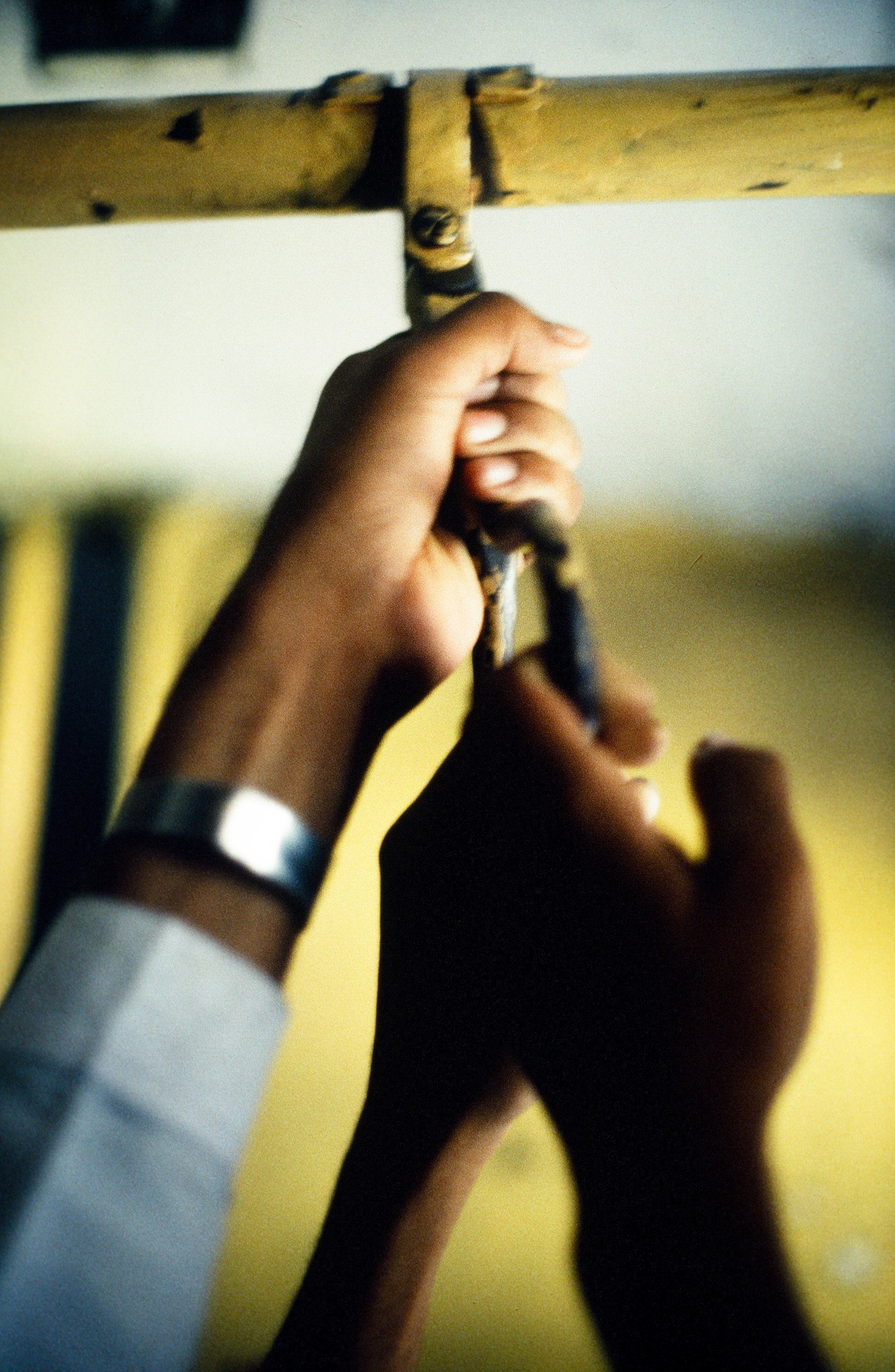
Stability in the otherwise unstable world of the Bombay commuter train passenger. Photo by Mark Mauchline.
If you were lucky, you had grabbed one of the few overhead handholds – handholds that could accommodate two or three hands, but had countless others grasping those same hands, or the arms attached to them, in search of some form of stability. The hand and arm tentacles falling from a single handrail often led to six or more people. Personal space was non-existent, with not enough room to even protect your pockets, or bags should you have reason to do so. I can only imagine it to be similar to being buried in an avalanche, with matter the density of concrete pressing on all sides, and you, unable to move. When there was movement, it was done in unison as the collective body swayed to the train’s back and forth, and side-to-side inclinations.

The term “standing room only”, taken to the extreme.
Photo © Pal Pillai / AFP.
Proximity to a window or door offered a portal into life’s reality for many Bombay residents, including amazing bits of resourcefulness such as the countless vegetable plots planted alongside the railway’s right of way. No available space was allowed to go to waste. But, I was often wedged inside the middle of the car, catching only glimpses of fingers, hands, and sometimes feet protruding inwards from the barred windows, with the people belonging to those appendages gripping the outside of the train as best they could.
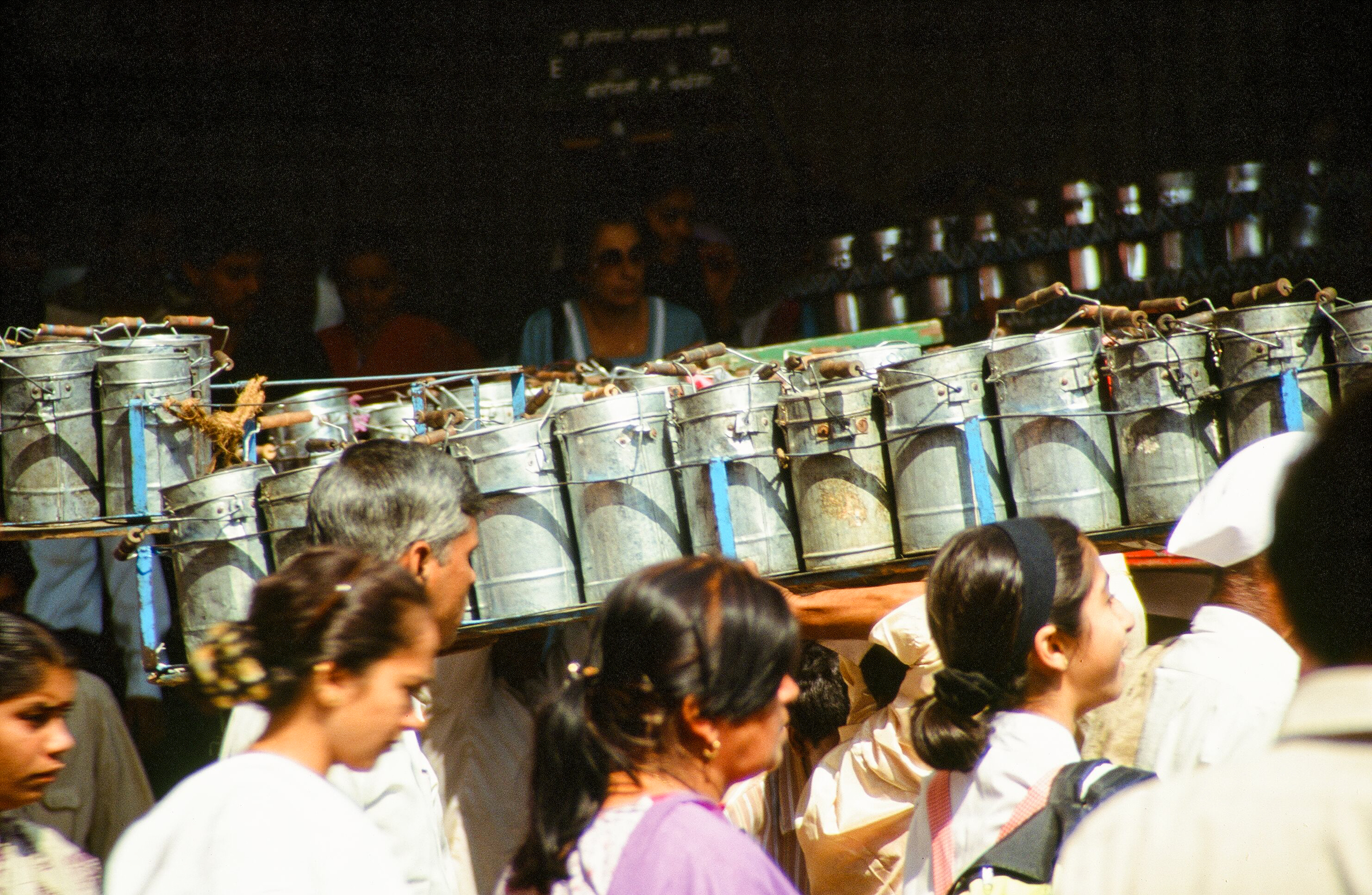
Lunches, soon to be delivered by dabbawallahs, and commuters exit Churchgate station.
Photo by Mark Mauchline.
Eventually, the train rolled into the southern terminus at Churchgate, exhaling its load of human cargo, all looking a little worse for wear in their now sweat-dampened, and wrinkled attire. Masses of people would off-load, along with the odd bicycle, and the thousands of tiffen carrier-packed lunches, which would be delivered to workers for the midday meal by Bombay’s dabba lunch delivery service. Off we all went, to wherever, to do whatever, only to come back and do it all over again in reverse later on that day.

The end of the line, as well as the beginning of another journey for Western Railways commuters:
Churchgate station. Photo courtesy of the Windsor Star.
So, as we in Vancouver fret about how to re-commission a small section of want-to-be expressway known as the Georgia Viaduct, perhaps we could learn something from this proposal half a world away. Our worries about the potential effects on traffic flow, and changing the status quo really amount to nothing compared to what is being proposed for Bombay. Regardless of what actually happens, and there are many hurdles to clear in the Bombay proposal, the beauty of it is in the possibilities presented to better urban life for all sectors of society. And, isn’t that what it’s all about? Dare to dream Vancouver. And in this case, let’s gain some inspiration, and insight into possibilities from perhaps the most unlikely of sources: Mumbai, India.
 Cyclelogical